
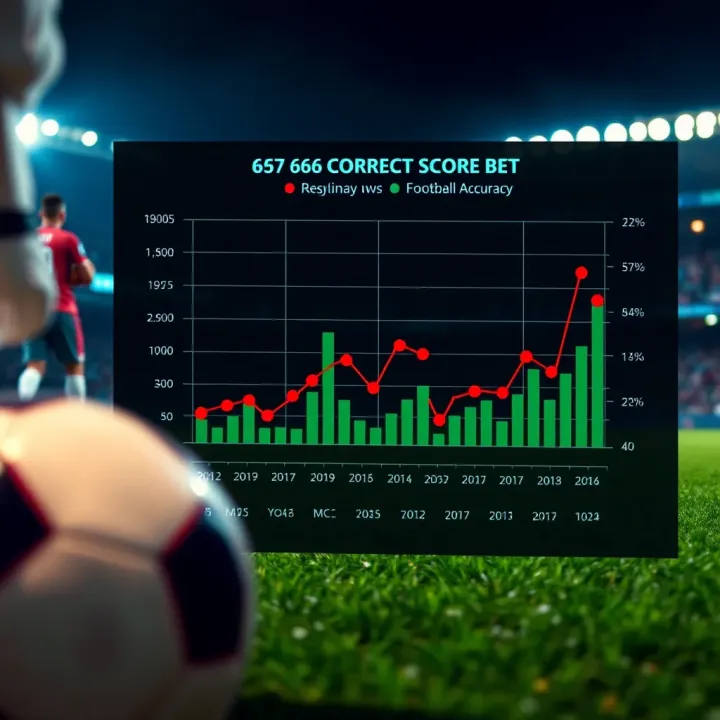
Understanding the 666 Correct Score Bet in Football
Discover what the 666 correct score prediction means in football betting ⚽️, its reliability, and tips to help Nigerian bettors improve wins using expert analysis 📊.
Edited By
Isabella Gordon
Predicting correct scores in football matches isn’t a matter of luck or guesswork—it requires observing patterns, understanding team dynamics, and analysing reliable data. Whether you’re watching the Nigeria Professional Football League (NPFL) or international contests like the English Premier League, knowing what affects results will sharpen your predictions.

Team Form and Momentum: Look at how both teams have performed in recent matches. A team on a winning streak often carries confidence that pushes them to score more. For example, if Enyimba FC has scored 10 goals in their last 5 league games, expect their attacking play to remain potent.
Injuries and Suspensions: Missing key players can drastically alter a team's strength. If Kano Pillars lose their top striker due to suspension, their goal-scoring ability might drop sharply.
Home Advantage: Teams playing at home generally score more, supported by familiar conditions and the crowd’s energy. This is especially true in stadiums like Teslim Balogun Stadium, where fans can be very vocal.
Head-to-Head Records: Past matches reveal psychological edges. If Heartland FC struggles against Akwa United historically, predicting fewer goals for Heartland could be wise.
Tactical Styles: Understand how teams line up. A defensive-minded team typically yields lower scoring games, while open, attacking teams increase score chances.
Use trustworthy sources like official league websites, verified sports analytics platforms, and data from Nigerian broadcasters covering the NPFL and international leagues. Avoid relying on unverified social media gossip or dubious apps.
Ignoring external factors like weather, which can affect play quality.
Overvaluing star players without considering team cohesion.
Chasing losses by changing your prediction method hastily.
Consistency beats speculation. Base your predictions on facts and patterns, not hunches.
Analyse match statistics such as shots on target, possession rates, and defensive errors.
Monitor team news up to match day.
Incorporate bookmakers’ odds to gauge market expectations.
Use a simple scoring model: for instance, assign points to form, injuries, home advantage, and head-to-head performance to derive a probable scoreline.
By paying attention to these elements and relying on concrete information, you can step up your score prediction game for tomorrow’s match days with more confidence and clarity.
Predicting exact football scores is no small feat. Whether you're a sports bettor or a football analyst, knowing why this task is tough helps you avoid common pitfalls and refine your approach. Recognising the challenges lets you set realistic expectations and develop strategies that improve your chances over time.
Football is famously unpredictable. Even when a strong team faces a weaker side, surprises happen. For example, a top Nigerian team like Enyimba FC may dominate possession and chances, but a sudden lapse in concentration or a brilliant individual effort from the opponent can upset the balance. This unpredictability comes from many factors — tactical decisions, player form on the day, and even referee calls.
Such uncertainty means no matter how good your analysis is, the actual scoreline can easily differ. This practical reality should guide your mindset: think in probabilities, not certainties.
Random incidents also affect results. A stray deflection causing an own goal, a penalty landing in an unexpected corner, or sudden weather changes like heavy rain can swing momentum drastically. Imagine a Lagos match where a sudden downpour turns the pitch slippery, favouring the underdog who defends deeper and counters quickly.
These spontaneous events are hard to predict before kick-off but significantly influence scoring outcomes. Accepting this randomness helps you understand why close score predictions are always a challenge.
No score prediction can guarantee 100% accuracy. Any person or tipster claiming absolute certainty is likely misinformed or exaggerating. Football has too many variables for one to claim certainty — even bookmakers avoid fixed score predictions. For instance, while betting markets can suggest likelihoods, an attacker’s sudden injury or a red card can flip expectations entirely.
Acknowledging this myth protects you from reckless betting decisions based on false promises.
Correct score predictions should be seen through the lens of probability. Betting odds reflect how likely outcomes are, not certainties. For example, a match may have a 30% chance for a 2-1 result, a 25% chance for 1-1, and so on. Your goal is to identify outcomes with higher probabilities and value.
By learning to read odds and probabilities properly, you make informed decisions rather than chasing impossible sure bets. This approach reduces losses and improves long-term success in football betting.
"Recognising football’s unpredictability and embracing probability lays the foundation for smarter, more realistic score predictions."
In summary, understanding these challenges equips you to navigate football score prediction with better judgement — essential for anyone serious about analysing matches or placing bets.
Predicting football scores accurately begins with understanding the key factors that influence match outcomes. These elements give vital clues on likely results and help you manage expectations – especially when betting or analysing games. Without a clear grasp of these factors, score predictions become guesswork.
A team's recent run of form reveals its current strength and confidence level. For example, a Nigerian Professional Football League (NPFL) club winning three matches consecutively usually builds momentum, increasing their chances to score and win again. Conversely, a team experiencing losses may be under pressure, which can lead to mistakes or a lack of attacking sharpness. Checking the latest five to ten matches helps gauge if a team is on an upswing or facing challenges.

Home advantage often boosts a team’s scoring chances. Crowd support, familiar pitch conditions, and less travel fatigue can improve performance. Lagos-based teams like Enyimba frequently show strong home form but struggle away. Also, some teams defend harder when away, leading to fewer goals. Observing these trends helps predict if a match might be low-scoring or open. In Nigeria, long road trips on poor roads can increase away team fatigue, impacting their effectiveness.
The absence of key players due to injury or suspension can significantly change a team's scoring potential. For instance, losing a prolific striker like Gernot Rohr’s chosen forward can reduce goal threats. Similarly, defenders’ absence might lead to more goals conceded. Hence, monitoring injury reports and official squad announcements before matchday is crucial.
Suspended players disrupt team balance, and fatigue from congested fixtures can dull sharpness. For example, during the busy ember months, Nigerian clubs competing in CAF competitions and local leagues may field weaker squads due to tired legs. This scenario can create unpredictable scorelines or favour fresher teams. Carefully factoring these elements refines your prediction accuracy.
Teams with attacking mindsets, such as those coached to press high and maintain possession, often produce more goal-scoring opportunities. In contrast, defensive teams, especially in knockout fixtures, aim to limit chances and settle for draws or narrow wins. Recognising these tactical approaches helps you anticipate scoring patterns. For example, a clash between an attacking Rivers United and a defensive Kano Pillars could result in a tight score with limited goals.
Styles dictate pace and flow. A fast counter-attacking team playing against a slow, possession-oriented side might exploit gaps for quick goals. Meanwhile, evenly matched tactical battles often yield fewer goals due to cautious play. Familiarity with Nigerian league styles – where physicality often meets technical skill – helps predict likely scorelines based on how teams line up tactically.
Understanding these factors provides a solid foundation for predicting football scores smarter and more confidently. Combining them with up-to-date data and real-time observations keeps your predictions sharp.
Reliable tools and data are key to making informed football score predictions. They provide objective insight rather than guesswork, which helps you reduce costly errors. In the world of sports betting, many factors interplay, and only by combining solid data sources can you form a clearer picture of how a match might unfold.
Shot statistics measure not just the volume but also the quality of chances a team creates. Expected Goals (xG) goes deeper by estimating how likely each shot is to result in a goal based on factors like distance, angle and type of shot. For example, a team may shoot 10 times in a match, but if those shots mostly come from outside the box, their xG might be low, signalling fewer high-quality chances. This helps you predict whether a team is likely to score more goals than the raw numbers suggest.
In the Nigerian league or even European matches watched locally, following xG statistics from platforms like SofaScore or StatsBomb alongside shot count gives you a better gauge of attacking performance. If a team consistently has high xG but few goals, it might indicate bad luck or poor finishing, which might correct itself next game.
Looking at past encounters between two teams reveals patterns that straightforward form tables may miss. Some teams traditionally struggle against a particular opponent due to tactical mismatches or psychological factors. For example, a Nigerian Premier League team might always find it tough to crack the defence of a specific rival, resulting in low-scoring matches when they meet.
Head-to-head stats show average goals scored, prevalence of draws, and margin of victories. These details help you weigh the likelihood of certain scorelines, especially if recent team form is similar but past results consistently reflect a specific trend.
Bookmakers' odds on exact scores are useful because they represent collective market wisdom filtered through expert algorithms and bettor behaviour. For instance, when you see odds like 3.50 on a 2–1 win, it indicates bookmakers rate that outcome as more likely than a 4–0 win at 15.00.
Understanding these odds helps you gauge which score predictions are realistic versus outliers. If your analysis suggests a different scoreline than what the market favours, it’s often wise to reassess your assumptions or look for additional data.
Bookmakers set these odds by combining historical data, current team form, player status, and even weather conditions, then adding a margin to ensure profit. They constantly adjust lines as new information emerges or bettors place money on certain outcomes.
Their dynamic approach reflects a moving picture of probabilities and offers a benchmark to compare your judgment. Recognising that bookmaker odds embed market sentiment sharpens your prediction accuracy by identifying when a price is too generous or too tight.
Local experts bring valuable context to score predictions that raw data might miss. Insights from Nigerian analysts shed light on team morale, recent coaching changes, or even subtle hints like how a home pitch's condition affects attacking play.
Following respected football bloggers or analysts through platforms such as Nairaland forums or KICKOFF Nigeria offers ground-level information that supplements statistics. Their narratives can explain why a team’s recent performance diverges from expectation, which is crucial for tomorrow’s matches.
The state of the pitch and weather can drastically alter match outcomes. For example, during the rainy season, a waterlogged pitch in Aba might neutralise skillful attackers, favouring a low-scoring draw. Similarly, strong winds or extreme heat can disrupt passing and player stamina.
Factoring in reports about pitch quality or weather forecasts from local stations helps refine score predictions beyond the numbers. Ignoring these environmental aspects risks missing key variables that Nigerian football and many African leagues see severally affect results.
Combining trustworthy tools and data sources empowers you to predict football scores with more confidence, blending objective info with real-world context. Use statistics, betting odds, expert views and conditions for a fuller understanding of upcoming matches.
In football score prediction, avoiding common pitfalls is just as critical as gathering the right data. Overlooking these mistakes can lead you down the wrong path, costing you time and, if betting, your money. Understanding these errors helps you sharpen your approach, making your score forecasts far more reliable.
Being a fan of a particular team can cloud your judgment when predicting scores. For instance, if you support a local club playing against a much stronger opponent, your hope might push you to overestimate their ability to keep the scoreline tight. This emotional bias can lead you to ignore key facts, such as the opponent’s attacking form or your team’s recent injury woes. To avoid this trap, it is best to separate your feelings from the facts and assess matches neutrally.
Many fall into the error of dismissing statistics and form trends in favour of personal hunches. Objective data such as expected goals (xG), recent head-to-head results, and player fitness offer practical insights that gut feelings cannot match. Suppose a team has won four consecutive matches against mid-table sides but struggles against top defenders—this pattern should influence your prediction more than your instinct about the team’s fighting spirit. Objective data guide you to realistic outcomes and reduce guesswork.
Weather can significantly affect football matches but often goes unnoticed in score predictions. Heavy rain or extreme heat, common in certain parts of Nigeria during specific seasons, can slow down the game, reduce scoring chances, and increase player fatigue. For example, if a game is played in a rain-soaked pitch in Ibadan, expect players to struggle with ball control and pace, which can lead to fewer goals than usual.
Travel distance and tight schedules impact player performance more than many realise. Nigerian teams on a congested fixture list or long trips to away games—say from Lagos to Enugu—may not perform at their peak. Fatigue lowers concentration and physical capability, factors that can change the match dynamic and scoring rate. Always check how packed the schedule is and the distance teams travel before setting score expectations.
No one can guarantee exact football scores, despite claims from some sources online or local betting shops. These absolute predictions often lure bettors into overconfidence and heavy stakes. Remember, football involves many variables that are simply unpredictable, from injuries during the match to referee decisions. Treat claims of absolute certainty with scepticism and avoid betting large sums based on such guarantees.
Even the most thorough prediction involves risk and natural variance. A well-informed guess doesn’t ensure a correct score, only improves chances. Betting or prediction strategies should therefore account for this by spreading risk and not relying entirely on one bet or model. Recognising that losses will happen and managing your expectations accordingly is crucial to long-term success.
Avoiding these frequent traps will strengthen your football score predictions, keeping your decisions rooted in realistic, practical factors rather than wishful thinking or misleading promises.
Improving your ability to predict correct football scores requires more than luck—it demands a structured approach combining data, tools, and smart betting habits. These practical steps are essential because they help reduce guesswork and increase your chances of making well-informed predictions that stand up under pressure, especially with big matches around the corner.
Relying on just one source for information can mislead your predictions. By cross-checking squad news, recent match stats, and injury reports, you get a clearer picture of a team’s current state. For example, if a top striker is injured but the team recently brought in a strong substitute, understanding both changes helps you anticipate how the attack might perform. The Nigerian football leagues often present fluctuating line-ups due to transfers or local competitions, so staying updated with local news outlets alongside global stats sites improves accuracy.
Line-up confirmations before the game are a goldmine for accurate score prediction. Coaches might rest key players or try new formations based on the match's importance. Watching out for final team sheets, which get announced an hour or so before kick-off, can change your outlook completely. If a core defender is missing, the team might concede more goals, affecting your predicted scoreline. Nigerian leagues are known for last-minute changes due to factors like travel challenges or fitness, so final line-ups often influence actual results more than earlier assumptions.
Several homegrown apps like OgaBet and NaijaBet offer prediction tools tailored to Nigerian leagues and conditions. These platforms combine local knowledge with statistical analysis, presenting data that match the unique dynamics of Nigerian football. Using these tools enhances your predictions since generic international models may overlook local nuances such as pitch conditions or team rotations during busy schedules.
Machine learning tools generate predictions based on vast datasets, spotting patterns that humans might miss. However, they’re not foolproof, especially when unpredictable factors like weather or sudden injuries come into play. Combining machine-generated insights with your personal judgment—such as watching recent match highlights or considering local expert opinions—provides a more rounded prediction. This blend is especially helpful for markets like the Nigerian Professional Football League (NPFL), where less data might be available but insider knowledge fills the gap.
Managing your betting budget wisely is key to long-term success. Rather than risking a large portion of your bankroll on one uncertain prediction, divide it into smaller, sensible stakes. For instance, if you have ₦50,000 set aside for betting in a week, placing ₦2,000 to ₦3,000 per game keeps you in the game even if a few predictions don't hit. This disciplined approach reduces pressure and encourages better decision-making.
Sometimes, the best move is to pause and reassess. During periods of unexpected outcomes or streaks of losses, continuing to bet recklessly can lead to bigger losses. Recognising when the data or your confidence levels don't support a bet is crucial. Taking a break helps reset your mindset and prevents chasing losses, a trap many bettors fall into during Nigeria’s intense ember months when games come thick and fast.
Combining data, practical tools, and smart money management strengthens your confidence and ability to predict correct scores. This holistic approach puts you ahead in Nigeria’s competitive football betting scene.
Discover what the 666 correct score prediction means in football betting ⚽️, its reliability, and tips to help Nigerian bettors improve wins using expert analysis 📊.

⚽ Stay sharp with MSport live football scores today! Follow every goal, match update, and key play in real-time — perfect for fans and bettors across Nigeria 🇳🇬

⚽ Stay up to date with live football scores on msport Score, your go-to for real-time updates on local and international matches, perfect for Nigerian fans.
⚽ Get smart with your weekend correct score predictions! Learn practical strategies, key stats, and how to manage risks for bets on Nigerian and global football matches.
Based on 5 reviews